讲座题目:绿色氢能与电池技术推动清洁能源转型Green Hydrogen and BatteryTechnology Driving CleanEnergy Transition
主讲嘉宾:汪国秀院士
讲座时间:2025年12月5日(周五)下午14:30
讲座地点:科创楼A楼205会议室
报告摘要:Green Hydrogen and BatteryTechnology Driving CleanEnergy Transition
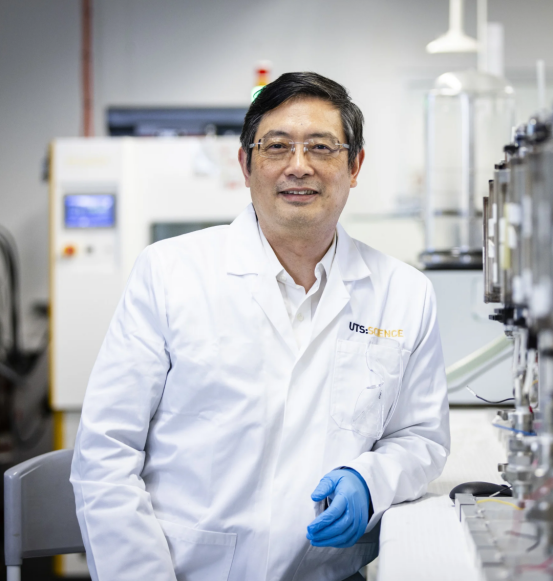
报告人简介:
汪国秀院士是悉尼科技大学杰出教授(2012 年至今)、澳大利亚研究委员会工业桂冠教授、澳大利亚科学院院士(FAA)以及澳大利亚技术科学与工程学院院士(ATSE)。他自 2010 年起担任清洁能源技术中心主任,同时还是 2024 至 2026 年英国曼彻斯特大学皇家学会沃尔夫森访问研究员。
王教授是一位材料科学家兼化学家,在电池技术、材料化学、电化学和储能领域是专家。他的研究方向包括锂离子电池、锂空气电池、钠离子电池、锂硫电池、超级电容器、储氢材料、石墨烯和 MXenes。
王教授获得了大量外部研究资助。他发表了 11 个书籍章节,拥有 2 项澳大利亚专利,撰写了 780 多篇同行评审期刊论文,其中包括发表在《自然・能源》(1 篇)、《自然・催化》(1 篇)、《自然・通讯》(13 篇)、《自然・纳米技术》(1 篇)、《自然综述・材料》(1 篇)、《科学进展》(3 篇)、《先进材料》(24 篇)、《德国应用化学国际版》(29 篇)、《美国化学会志》(8 篇)、《化学会评论》(3 篇)、《化学评论》(1 篇)、《纳米快报》(10 篇)、《能源与环境科学》(6 篇)、《先进能源材料》(32 篇)、《先进功能材料》(18 篇)、《化学》(6 篇)、《ACS 纳米》(9 篇)、《材料化学学报 A》(38 篇)、《先进科学》(7 篇)、《小》(18 篇)、《纳米能源》(15 篇)、《电化学能源评论》(2 篇)、《储能材料》(17 篇)和《美国国家科学院院刊》(2 篇)上的论文。他在全球范围内做过 100 多场邀请报告。王教授的论文被引用次数超过 83000 次 / 96000 次(Web of Science/Google Scholar),H 指数为 157/170。他的研究成就获得了众多奖项和认可,其中包括:2017 年英国皇家化学会会士(FRSC);2018 年国际电化学会会士(ISE);2020 年欧洲科学院院士(EurASc)。2018-2024 年,他连续 7 年被科睿唯安评为高被引科学家,且在 2018 年、2022-2024 年期间,在化学和材料科学两个领域均获此殊荣。他还获得了 2022-2025 年Research.com澳大利亚材料科学领域领袖奖。
目前,他担任《储能材料》(爱思唯尔)和《电化学能源评论》(施普林格 - 自然)的副主编。
Professor Guoxiu Wang is a UTS Distinguished Professor(2012-Present), an ARC Industry Laureate Fellow, Australian Academy of Science Fellow(FAA), and Fellow of the Australian Academy of Technological Sciences & Engineering (ATSE). Director of the Centre for Clean Energy Technology (2010-Present). He is also a Royal Society Wolfson Visiting Fellow at The University of Manchester, UK, from 2024 to 2026.
Professor Wang is a materials scientist and a chemist. He is an expert in battery technologies, materials chemistry, electrochemistry, and energy storage. His research interests include lithium-ion batteries, lithium-air batteries, sodium-ion batteries, lithium-sulfur batteries, supercapacitors, hydrogen storage materials, graphene and MXenes.
Professor Wang has won a large number of external research grants. He has published 11 book chapters, been awarded two Australian patents, and authored over 780 refereed journal papers, including publications in Nature Energy (1), Nature Catalysis (1), Nature Communications (13), Nature Nanotechnology (1), Nature Reviews Materials (1), Science Advances (3), Advanced Materials (24), Angewandte Chemie International Edition (29), Journal of the American Chemical Society (8), Chemical Society Reviews (3), Chemical Reviews (1), Nano Letters (10), Energy & Environmental Science (6), Advanced Energy Materials (32), Advanced Functional Materials (18), Chem (6), ACS Nano (9), Journal of Materials Chemistry A (38), Advanced Science (7), Small (18), Nano Energy (15), Electrochemical Energy Reviews (2), Energy Storage Materials (17) and PNAS (2). He has delivered over 100 invited talks worldwide. Wang's publications have attracted over 83000/96000 citations with an H-index of 157/170 (Web of Science/Google Scholar). He has received many awards and recognitions for his research accomplishments, some of which include: 2017 Fellow of the Royal Society of Chemistry (FRSC); 2018 Fellow of the International Society of Electrochemistry (ISE); 2020 Fellow of the European Academy of Sciences(EurASc). He was listed as a Highly Cited Researcher by Clarivate Analytics for 7 years consecutively in 2018-2024, and 2018, 2022-2024 in two categories of Chemistry and Materials Science. 2022-2025 Research.com Materials Science in Australia Leader Award.
Currently, he serves as an Associate Editor for Energy Storage Materials (Elsevier) and Electrochemical Energy Reviews(Springer-Nature).

 学院官方公众号
